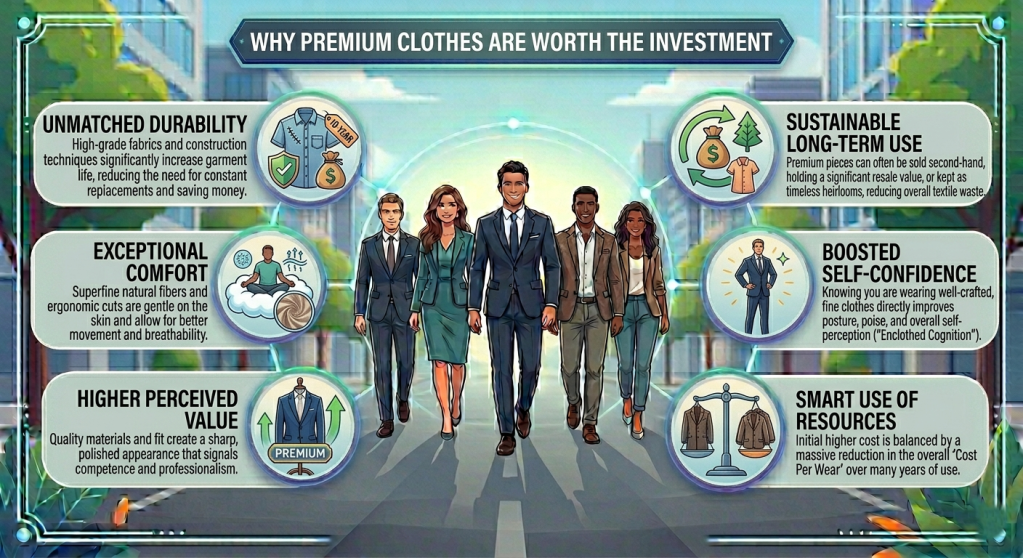
Spending $200 on a coat sounds reckless until you do the math. If that coat lasts ten winters, you’re paying $20 a year for outerwear that never lets you down. Compare that to a $50 coat that falls apart after two seasons, and the “expensive” option suddenly looks like the smarter financial decision.
This is the core argument behind treating premium clothing as an investment rather than an expense. It’s not about flaunting money or chasing labels. It’s about understanding where your money actually goes furthest.
That said, “investment” doesn’t mean “always pay full price.” Plenty of smart shoppers build premium wardrobes by waiting patiently for the right yard of deal instead of buying at retail every time. Let’s break down the real financial logic behind premium clothing, and how to apply it without overspending.
Reframing Clothing as an Investment, Not Just a Purchase
Most people think about clothing purchases in terms of upfront cost. Investment thinking asks a different question: what’s the total value extracted from this item over its entire useful life?
This shift in perspective changes which purchases actually make financial sense, often in surprising ways.
The Cost-Per-Wear Formula
The simplest way to evaluate clothing as an investment is cost-per-wear: total price divided by the number of times you’ll realistically wear the item.
A $300 pair of leather boots worn twice a week for five years works out to roughly $0.60 per wear. A $60 pair of boots that falls apart after twenty wears costs $3.00 per wear. The premium option, despite the higher sticker price, is the cheaper choice in practice.
This formula doesn’t apply to every purchase. An item worn rarely rarely justifies a premium price tag, regardless of quality. But for daily staples, the math frequently favors paying more upfront.
Where Premium Pricing Actually Reflects Real Value
Not all expensive clothing is genuinely worth the price. Understanding where premium pricing reflects real material and construction differences helps separate smart investments from marketing markup.
Material Quality
Premium garments typically use better raw materials: tighter weaves, higher-grade leather, stronger natural fibers. These materials resist wear, hold color longer, and maintain structure through repeated use in ways cheaper materials simply can’t match.
This difference often isn’t visible on a hanger. It shows up six months later, when the cheaper version has already started breaking down.
Construction Standards
Beyond materials, premium clothing usually involves more careful construction: reinforced seams, proper interfacing, better finishing on edges and closures. These details add labor cost, which gets reflected in the price, but they’re also exactly what determines how long a garment survives regular wear.
Design Longevity
Premium brands, particularly those focused on classic rather than trend-driven design, tend to produce pieces that remain stylish for years rather than becoming dated within a single season. This extends the useful life of the investment well beyond its physical durability.
Where Premium Pricing Doesn’t Reflect Real Value
Investment thinking also means recognizing when “premium” is really just marketing.
Brand Markup Without Quality Difference
Some brands charge premium prices primarily for logo recognition rather than meaningfully better materials or construction. This is where investment thinking requires actually inspecting the garment rather than trusting the price tag or brand name alone.
Trend-Driven Premium Items
Even well-made clothing loses investment value quickly if it’s tied to a specific, fast-moving trend. A perfectly constructed jacket in a trend color that fades from relevance within a year doesn’t deliver the same long-term value as a timeless, well-made alternative.
Items With Naturally Short Lifespans
Some clothing categories, like certain children’s clothing or maternity wear, have inherently short useful windows regardless of quality. Premium investment thinking matters less here, since the limiting factor is need, not durability.
The Resale and Secondhand Factor
One often overlooked piece of the investment puzzle is resale value, which significantly favors premium clothing.
Why Premium Items Hold Value Longer
Well-made clothing from reputable brands typically retains a meaningful percentage of its original value on the secondhand market, sometimes years after the original purchase. Fast-fashion items, by contrast, usually have little to no resale value once worn.
This means part of the original investment can effectively be recovered later, further improving the overall cost-per-wear calculation when resale is factored in.
The Growing Secondhand Premium Market
Resale platforms focused specifically on premium and designer clothing have grown substantially, making it easier than ever to both sell premium pieces you no longer wear and buy quality items secondhand at a discount.
This creates a kind of investment loop: buying quality, wearing it well, then reselling it to fund the next thoughtful purchase.
How to Build a Premium Wardrobe Without Overspending
Investment thinking doesn’t mean paying full retail price every time. Smart shoppers combine quality-focused buying with patient, strategic spending.
Prioritize Frequently Worn Categories First
Focus premium investment on items worn most often: everyday shoes, work bags, winter coats, core trousers. These categories deliver the strongest cost-per-wear returns because of how frequently they’re used.
Items worn occasionally, like formal wear for rare events, generally don’t need the same premium investment, since infrequent use limits the cost-per-wear benefit regardless of quality.
Buy at the Right Time, Not Just the Right Price
Retail prices fluctuate significantly throughout the year. Waiting for end-of-season sales, or catching a genuine yard of deal on a premium item you’ve already identified as worth owning, lets you access investment-grade quality without paying full retail price every time.
This requires some patience and planning rather than impulsive buying, but it consistently improves the overall return on premium clothing purchases.
Maintain What You Buy
Investment thinking extends beyond the purchase itself. Proper care, cleaning, storage, and minor repairs significantly extend the useful life of premium clothing, directly improving the cost-per-wear math over time.
Many premium brands also offer repair or refurbishment services specifically because they expect their products to last for years, not seasons.
Avoid the Trap of Buying Premium Everything
Investment thinking isn’t about upgrading your entire wardrobe to premium pricing across every category. It’s about identifying which specific items justify the higher cost based on frequency of use and durability needs, while keeping lower-stakes items more budget-friendly.
A balanced wardrobe usually mixes a few premium investment pieces with reasonably priced basics, rather than treating every purchase as equally deserving of premium spending.
A Simple Framework for Deciding What’s Worth the Investment
Before making a premium purchase, ask these questions:
- How often will I realistically wear this? Frequent wear strongly favors premium investment.
- Does the price reflect actual material and construction quality, or mostly branding? Inspect the garment itself, not just the label.
- Is this a timeless design or a passing trend? Timeless pieces extend the useful life of the investment.
- Could I get this same quality through patient shopping? Watching for a real yard of deal on identified quality pieces often beats paying full retail price.
- Does this category typically hold resale value? Categories with strong secondhand demand improve the overall investment return.
Conclusion
Premium clothing earns its higher price tag when it translates into genuine durability, better materials, and longer useful life, particularly for items worn frequently. The math consistently favors quality over cheap, disposable alternatives once cost-per-wear enters the picture.
This doesn’t mean overspending recklessly or assuming every expensive item is automatically worth it. Smart investment thinking means inspecting actual quality, focusing premium spending on frequently worn categories, and remaining patient enough to catch a legitimate yard of deal rather than always paying full retail.
Treated this way, premium clothing stops being an indulgence and starts functioning the way any good investment should: paying you back steadily, wear after wear, year after year.
FAQs
1. How do I know if a premium price actually reflects better quality? Check the materials, stitching, and construction details directly rather than relying on brand name alone. Genuine quality differences are usually visible and tactile, not just implied by price.
2. Is it worth paying premium prices for items I rarely wear? Generally no. Cost-per-wear math favors premium spending on frequently used items. Rarely worn pieces rarely justify the higher investment, regardless of quality.
3. Can buying premium clothing secondhand still count as a good investment? Yes, often even more so. Secondhand premium items typically cost significantly less than retail while still offering the durability and quality benefits of the original construction.
4. Does waiting for sales undermine the investment logic? Not at all. Catching a genuine yard of deal on a premium, frequently worn item often improves the overall investment value by lowering the upfront cost without sacrificing quality.
5. Should my entire wardrobe be premium if I want to invest wisely? No. The smartest approach focuses premium spending on a few frequently worn, durable categories while keeping lower-stakes items reasonably priced.


